


Dice have settled bets for thousands of years, and online casinos have since turned them into a whole family of games. Some stay close to the original, with real dice and a live dealer. Others give you a number on a screen. One game asks you to pick a target, another a total, and a third a combination of dice. Same familiar starting point, very different decisions.
So we've put the most common types of crypto dice games in one place. We'll show you how each plays, what sets it apart and who might enjoy it. If you're deciding which crypto dice game to try, start here.
What makes one dice game different from another?
Those different decisions are what separate one dice game from another. How many dice there are, or who rolls them, matters less than what the game asks you to do. Seen that way, most types of dice games fall into three groups.
Slider dice is the simplest. You get one random number and set your own odds by moving a target, and classic crypto dice is the obvious example.
Multi-dice games bring actual dice to your screen, and Sic Bo is the classic example, with three dice and a wide spread of bets at fixed payouts. Then there's live dice, where a host runs each round in a studio setup. Lightning Dice adds random multipliers to that format, while Football Studio Dice falls somewhere in between, with real dice in a live studio but a simple Home, Away or Draw call.
Of course, these lines aren't strict, since Sic Bo, for example, also comes in live versions. Still, the groups make a handy map. We'll start with classic dice, where you have the most control over your win chance.
Classic crypto dice (over/under)
Classic crypto dice, or slider dice, don't take long to get your head around. You drag the slider, the numbers change, you roll. That's it, at least on the surface.
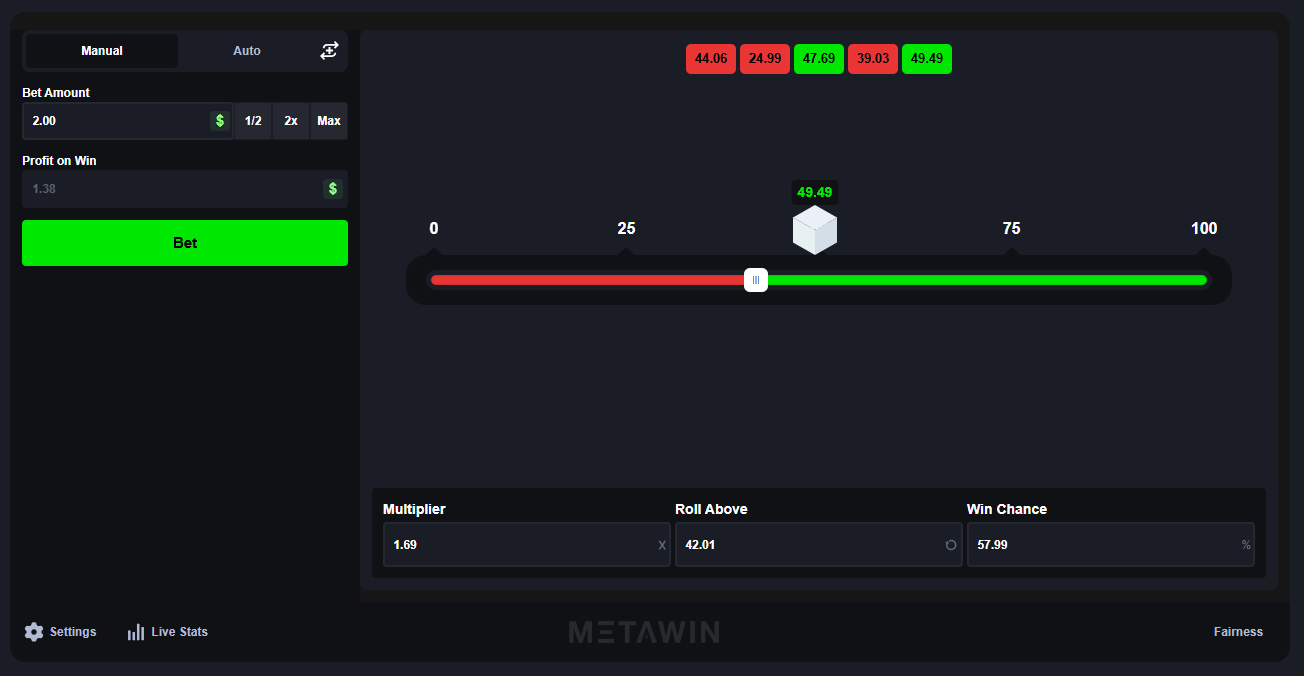
Look a bit closer and you'll see the three numbers on screen are tied together. Win Chance, Roll Above and Multiplier move as one. Set a 50% win chance and Roll Above goes to 50, giving you a 1.94x multiplier. Push the win chance up and the payout shrinks. Pull it down and the payout grows. You choose that trade with the slider.
That trade follows a fixed formula, and at MetaWin the multiplier is 97 divided by your win chance. That reflects the game's 97% RTP and 3% house edge, which stay the same wherever you leave the slider.
We won't go through every button here, since our guide on how to play crypto dice already does that. In a classic dice game, everything comes back to that one slider and how far you're willing to push it.

Author's Thoughts
Matija Antic
Classic dice is where I'd send anyone new to the category. One slider, three linked numbers, and a 3% house edge that stays put wherever you set it, so there's nothing hidden to learn.
Sic Bo
Where slider dice gives you one number and a line to set it against, Sic Bo goes back to something far older. This three-dice classic comes from ancient China, and its table offers a bet on most ways three dice can land, which is why it can look busy the first time you open it.
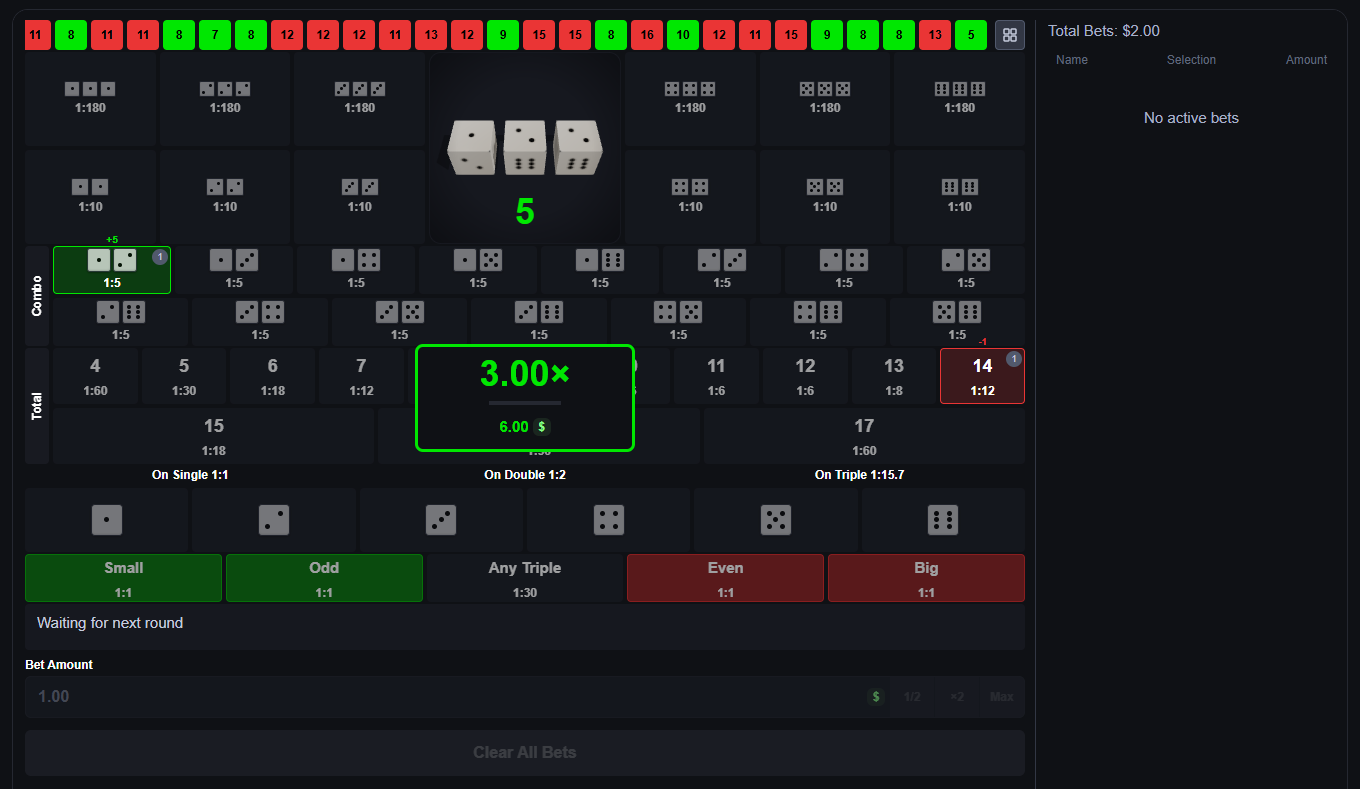
Small and Big are the easiest bets to read. Small covers totals from 4 to 10, and Big covers 11 to 17. Both pay 1:1. Any triple beats either bet, though, so three 3s still lose on Small even though they add up to 9. Take the triples out and the two bets would each have a 50% chance of winning. Those excluded rolls give the house its edge.
Around Small and Big, you'll find the side bets that give Sic Bo its character. On MetaWin Sic Bo, pictured above, a specific double pays 10:1 and any triple pays 30:1. Exact totals pay anywhere from 6:1 to 60:1, with a specific triple topping the table at 180:1. Paytables vary between Sic Bo versions, so check the table before you bet.
If you're coming over from slider dice, Sic Bo's odds can look a bit off at first because they leave your stake out. A 1:1 win hands back double what you bet, which the slider would show as 2x.
Our lobby carries several takes on the game, including live tables and multiplier editions, so when you play Sic Bo at MetaWin you can pick the pace that suits you best.
Author's Thoughts
Matija Antic
The Sic Bo rule that catches most new players is the triple. Three 3s add up to 9, yet a Small bet still loses, and that rule is what gives the house its edge on Small and Big.
Lightning Dice
Some games are mostly about the bet, but Lightning Dice puts just as much effort into the show around it, with a host, a glass tower and three dice that tumble through it before they settle at the base. The studio presentation gives you something to watch between placing your bet and seeing where the dice land.
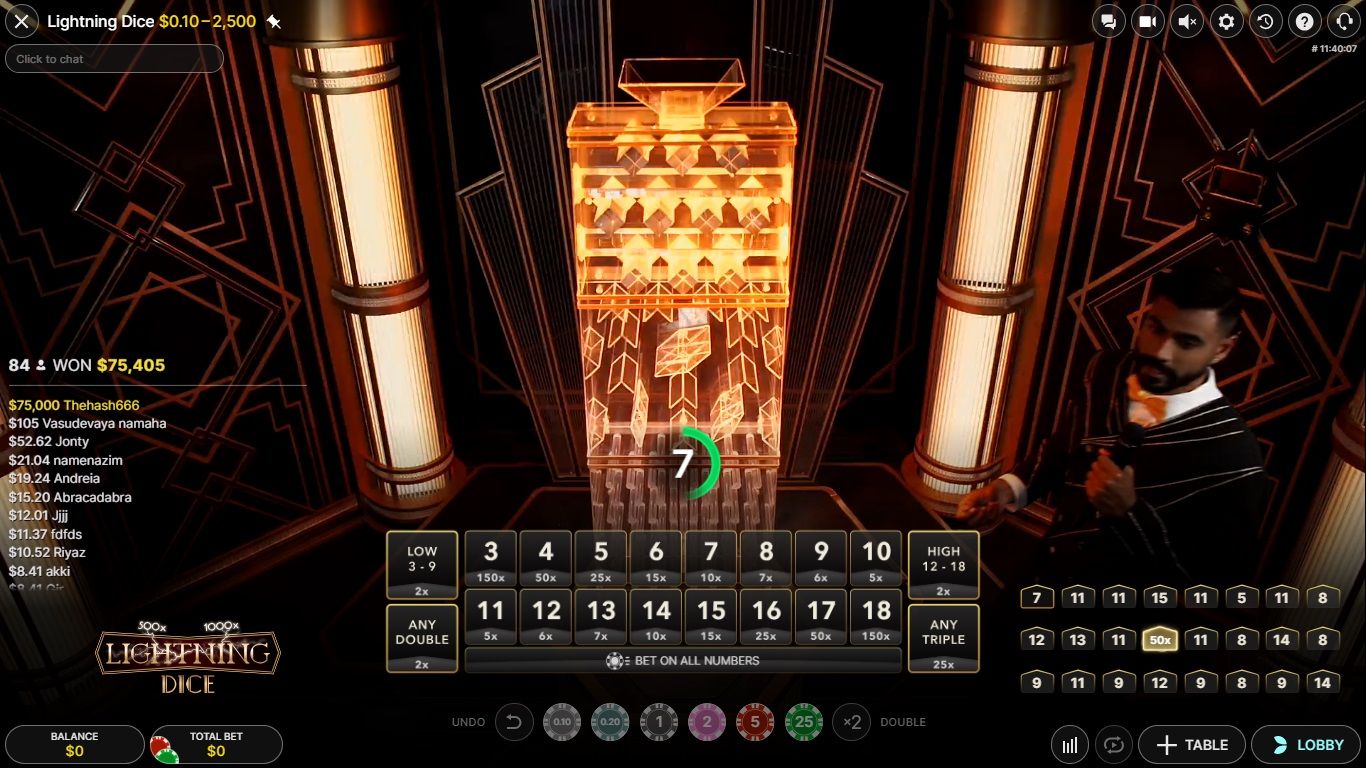
You can back any total from 3 to 18, with payouts that vary according to how likely each total is. There are wider bets too, including Low, High, Any Double and Any Triple. Low covers 3 to 9 and High covers 12 to 18, so neither pays if the dice add up to 10 or 11, and both lose on any triple. Those two middle totals are also the most common with three dice.
Once betting closes, lightning strikes two to four totals on the board and assigns them random multipliers of up to 1,000x. Only then does the host send the dice down the tower. If you backed a struck total and the dice land on it, you get the boosted payout shown for that round. Otherwise, a winning bet pays at its regular rate.
If you enjoy watching a result build up before it lands, you can play Lightning Dice at MetaWin and join the next round from the live lobby.
Hacksaw Dice, Football Studio Dice and other dice games
Hacksaw Dice keeps the slider format but comes from Hacksaw Gaming. You set a target, call over or under, and the payout adjusts to how likely your call is to land, so it will feel familiar if you've played classic dice.
Football Studio Dice from Evolution borrows its structure from a football match. Four dice sit in automatic shakers, two for Home and two for Away, split across a first and second half. You back Home, Away or a Draw, and the side with the higher two-dice total wins. Home and Away pay even money, while a Draw pays 8:1, rising to 80:1 if both sides roll double six.
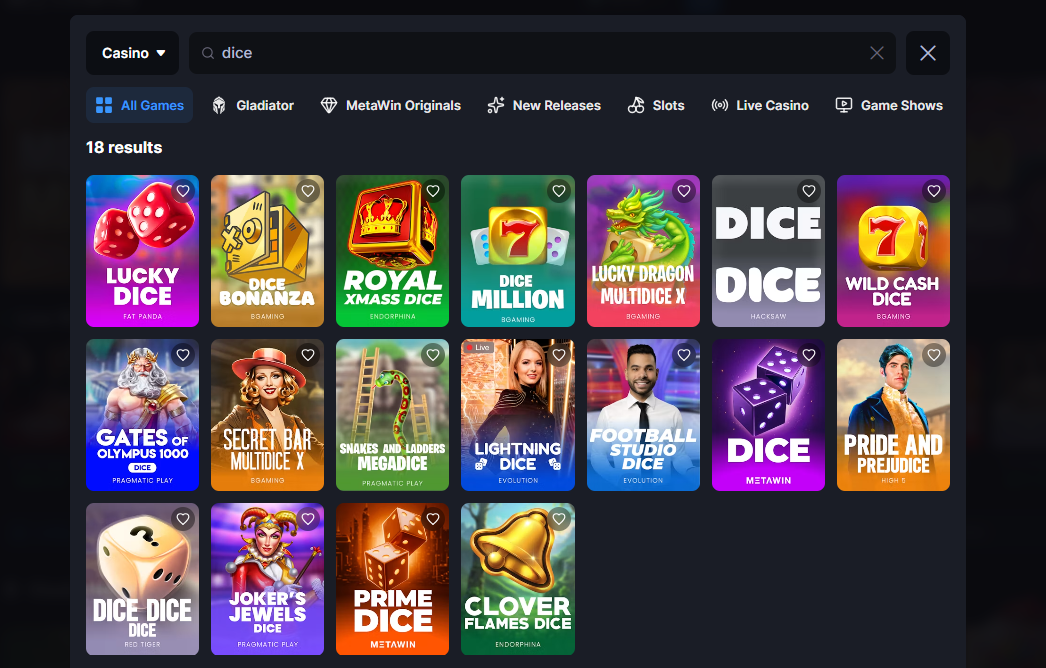
Prime Dice, from MetaWin Studios, adds another twist, as it lets you bet on a result landing between two points or outside them. If you want to see which versions are available now, search for dice in the lobby.
Which type of dice game should you play?
There's no rule that says you have to settle on a single game, but each type of crypto dice game does lend itself to a certain kind of session. Classic dice is the one to open when you want quick rolls and control over your win chance.
Moving to Sic Bo means giving up some of that say in exchange for more ways to bet on each roll, while Lightning Dice goes a step further by wrapping the bet in a live show with the chance of a boosted payout.
Whichever you go for, no betting system removes the house edge or guarantees a profit, so set a budget before you start. When you're ready, you can play crypto dice at MetaWin and explore the games in the dice lobby to see which one clicks.


